Mar 2026 �Present
Research Assistant Intern, AI Research Group
Working on LLM for Recommendation (LLM4Rec).
Profile
AI4X Undergraduate Researcher
TU Delft × Eindhoven University of Technology
Working across computer science, electrical engineering, and applied physics. Primary interest in AI for Science, foundation models, and AI-driven analog circuit design.
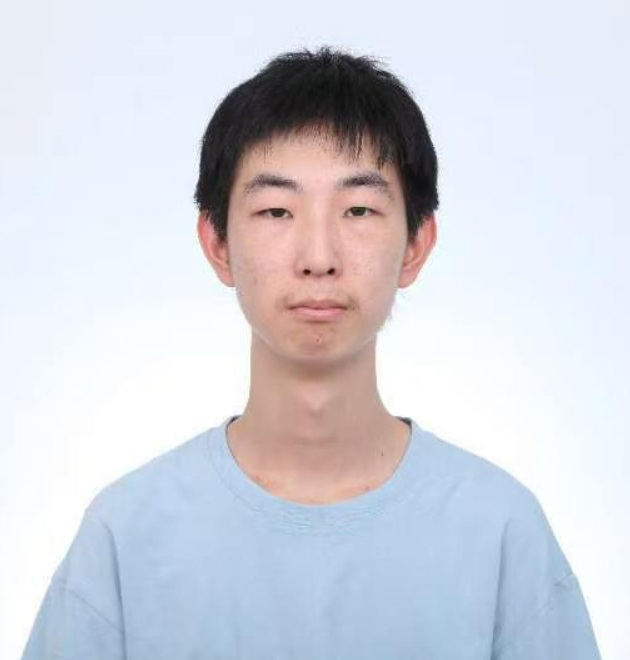
Undergraduate in the joint program between Delft University of Technology and Eindhoven University of Technology.
My training spans computer science, electrical engineering, and applied physics �which shapes how I approach research: not as isolated software tasks, but as questions about representation, system behavior, and design under constraints.
I am moving toward research that connects modern machine learning with scientific understanding and engineering automation, especially in domains where physical structure still has to remain legible.
Problems that sit where model capability meets scientific or engineering structure.
Applying learning systems to scientific and technical problems where domain constraints, structure, and usefulness matter more than generic benchmark performance.
Foundation models as reasoning tools for technical workflows, structured knowledge, and complex design tasks rather than only conversational interfaces.
AI-driven methods for analog circuit modeling, optimization, and design automation in physically constrained environments.
Recent work across machine learning research, semiconductor workflows, and data-driven scientific analysis.
Mar 2026 �Present
Working on LLM for Recommendation (LLM4Rec).
Jul 2025 �Sep 2025
Semiconductor IC design workflows and EDA toolchains �schematic design, pre-layout simulation, layout verification, DRC/LVS, and MPW-oriented tape-out preparation.
Sep 2023 �Feb 2024
Environmental data research on PM2.5 air pollution and respiratory disease incidence using Python for exploratory analysis, statistical inference, and visualization.
Open to research conversations, academic collaborations, and future opportunities.